Not necessarily!
In fact some alterations can have the adverse effect and devalue a property. During my property renovation career I have heard the assertion that any sort of renovation adds value so many times including in my initial consultations with clients. Just because you potentially can do something it doesn’t necessarily mean it is advisable or the best route forwards for either you or your property.
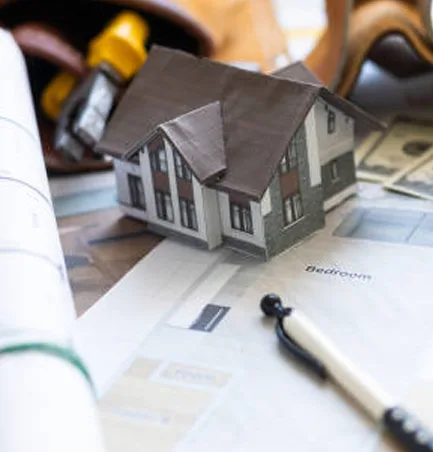
Assumptions can arise from inaccurate or misleading information. Repeated often enough they become “fact”, which they are not. Basing your renovation decisions on what is essentially an assumption can lead to inadvisable solutions, often resulting in losing money.
People take on property renovation for many different reasons – property sale, family, lifestyle, or health reasons for example. ‘Keeping up with the Joneses’ though is not perhaps the best reason for tackling your property with a hammer…what is right for one property is not necessarily right for another. It is important to consider the ramifications of what you undertake and whether you are going about it in the best way possible.
It might be worth remembering too that the word ‘renovation’, or ‘refurbishment’ or even ‘remodelling’ as it’s called in North America, does not necessarily mean pulling the house to bits. There are all sorts of connotations – even sorting the front garden and tarting up the paintwork on the gate to improve the curb appeal, or changing the internal décor to more neutral tones to promote a property sale can come under the auspices of any of these words.
Most alterations are possible in some way shape or form but there are a lot of considerations that come into play including what your long-term intentions are for the property and whether your budget can be used more productively. From my perspective in my professional role, my first responsibility is towards my client and whether what they propose is appropriate for them and too for the future of their property/investment. It is a bit of a juggling act sometimes, trying to be diplomatic and yet realistic at the same time.
The reality for most people is that their property is the single biggest asset and can absorb money like a sponge. Realistically the only time you will get your money back or see a return on your investment (ROI) is when you sell the property. If you buy a property for £200K for example, your potential renovation works cost you £150K and the realistic resale value of the property is £275K you will end up out of pocket, which might affect your ability to move on.
The Positive Potential…
Alterations that increase habitable space.
Simply speaking, you can go up, down or sideways or you can readjust internal space to work more favourably.
Loft Conversion: The potentially unused space or the dumping ground of forgotten items of a loft/attic can be a great addition to living space for an additional bedroom with ensuite perhaps? You are adding to the both the bedroom and the bathroom count in the property.
Cellar Conversion: Again, cellars can be a great source of extra habitable space as some cellars can mirror the ground floor footprint of the house. Whereas cellars had specific uses in days gone by, most cellars these days are primarily used for storage.
Garage Conversion: Garage Conversion is one option with a foot in both camps of potentially positive and negative. If you have a property with no off-road parking and you convert the garage into habitable space, it can have a detrimental effect on the property value because you have nowhere to park the car. In these times of parking zones and permits you are potentially adding to the household budget – parking permits (if they are not already oversubscribed in your location!) can be expensive, and you might end up with a half mile hike to your front door.
Conversely, if you have off road parking with an attached garage then potentially it can be worthwhile to convert all or part of the garage into habitable space. Most garages are used for additional storage space rather than a car. With some new-build properties the garages are little more than a courtesy; so tight that you can get the car inside but not actually open the doors!
Extension: An extension or a conservatory can be a good option if you have outside space, particularly to the rear or side of your property.
Repurpose Internal Space: Sometimes if you have a dark, clunky interior layout, opening up, or adjusting a space can make the habitable areas more useable and desirable. Natural light can lift the energy in a property and make it feel lighter, bigger and brighter. Just remember that any structural alterations will require the services of a structural engineer and oversight from Building Control. You can’t just remove walls willy nilly!
There are Building regulations and potentially Planning conditions associated with the above options, which govern details like minimum head height for example. I talk about conversions of this type in more detail in my book, Penny Practically Does…Renovation. There are also contra-indications, but as always, adequate pre-works research is a priority and each property is individual.
A decent kitchen, an extra bathroom/ensuite can also have a beneficial effect for your property. A kitchen upgrade doesn’t always mean replacing the whole thing in its entirety. We have completed several projects where the layout was fine, we simply changed the aesthetics.
The Negative Potential…
We’ve already talked about the potential negatives of a garage conversion, so what happens if you make alterations to your property without the requisite permissions?
Alterations without Planning or Building Control consents: Frankly, not a great idea! The Planning department and Building Control each have different responsibilities and both are covered by different regulations. Simplistically, Planning considers whether proposals are complementary to the local environment and gives permission (or not!) for work to proceed. Building Control establishes the technical detail and whether what you propose complies with Construction Standards and Building Regulations. When they are satisfied, you can proceed.
If you renovate without the requisite consents, it will come back to bite you eventually. Be mindful that some work you complete on a property needs to have proof of compliance, or in the case of Planning, proof of consent. Without it, you won’t be able to sell your property in the future, and you will probably be out of pocket too having to put it right.
Period Properties: Period properties have period features. Listed buildings have their own criteria and associated regulations. In the interests of “modernisation” it is not always advisable to remove the features that give these buildings their character. It can in some circumstances devalue the property as well as limiting its on-going market appeal.
Installing a swimming pool: Not an uptick for most people. They are not cheap to install, and the upkeep isn’t cheap either. In a world that is becoming more climate protective, a swimming pool is not always seen as a priority installation.
Incompetent Works: The structure of any property is a priority. There is little point in decorating throughout if the roof is leaking and you have damp everywhere. Apart from being a waste of money, you are kicking the can down the road. In the interim period the problem doesn’t go away and probably becomes a more significant and expensive problem to put right.
Repurposing a bedroom: Deliberately reducing the number of bedrooms in a property is not the best idea as it can change the demographics of a property. When you come to sell it can reduce the market appeal for the property.
With any works, quality is key and you often get what you pay for. When undertaking any work in your property make it the best it can be. Just slapping on a coat of paint without adequate preparation for example, doesn’t give a great finish and it looks slapdash.
When considering any form of renovation, I would suggest you do your own research ensuring the sources are reliable, and work with the facts. Don’t let assumptions drive your renovation decisions. It is a sure-fire way of hitting you in your pocket at some point in the future.
If you have found this insight useful and you want a practical guide to help you understand and renovate your own property then Penny Practically Does…Renovation is available on Amazon. The book is available in Ebook and Kindle Unlimited. The printed paperback and hardback versions are available now. You can secure your copy today.